
Senators Cruz and Rosen introduce Muhammad Ali Boxing Revival Act to Senate
2 sources • 5 min read • Latest: Jul 30, 2026, 11:00 PM
Last updated Jul 30, 2026

The Muhammad Ali American Boxing Revival Act was introduced in the Senate on July 30, 2026, by Senators Ted Cruz and Jacky Rosen. This bipartisan bill aims to enable UFC-style promotion in boxing through the establishment of United Boxing Organizations (UBOs), which would facilitate exclusive contracts and introduce promotional rankings. Although a version of the bill has passed the House, several changes must be reconciled between the two chambers before a full vote can occur. Among the Senate's proposed changes is a longer contract negotiation timeframe for fighters and stronger provisions for health, safety, and pay. The next steps include potential amendments in the Senate and further negotiations with the House.
- •The bill was introduced on July 30, 2026.
- •It aims to allow UFC-style promotion in boxing.
- •The House version passed in March but requires reconciliation.
- •Fighters could negotiate new contracts 90 days before expiration.
- •Next steps involve amendments and negotiation with the House.
- 11:00 PMMMA Fighting — Senators Ted Cruz, Jacky Rosen introduce Muhammad Ali Boxing Revival Act to Senate with new provisions from House version
- 11:00 PMYahoo Sports — Senators Ted Cruz, Jacky Rosen introduce Muhammad Ali Boxing Revival Act to Senate with new provisions from House version
"WASHINGTON, DC - JULY 06: Sen. Ted Cruz (R-TX) speaks during an event to mark the first day of trading for "Trump Accounts" in the Oval Office at the White House on July 06, 2026 in Washington, DC. The accounts are a $1,000 government seed deposit for children born between 2025 and 2028, with family and employer contributions capped at $5,000 annually and restricted to low-cost U.S. equity index funds. (Photo by Anna Moneymaker/Getty Images) | Getty Images The Muhammad Ali American Boxing Revival Act was officially introduced into the Senate on Thursday in a bi-partisan effort by Senator Ted Cruz (R-Texas) and Senator Jacky Rosen (D-Nevada), which seeks to allow UFC style promotion in the sport of boxing. A separate version of the bill already passed through the House of Representatives back in March, although the Senate version features several changes that would have to be reconciled before a full vote could be taken and the measure potentially signed into law by President Donald Trump. The two chambers would have until January to reconcile the full bill or a new Congress is introduced after the November elections and the whole process would start over again. “In the twentieth century, boxing produced household names and championship fights that captivated the country,” Cruz said in a press release. “Past reforms improved the safety and fairness of the sport, but today, too many of the biggest matchups never happen because the sport is trapped in a fragmented system. This bipartisan legislation will revive marquee matchups, strengthen protections for fighters, and make boxing great again.” At the heart of the bill is the introduction of United Boxing Organizations (UBO’s), which would allow UFC style promotion in the sport of boxing. That includes a promotion being allowed to sign fighters to exclusive contracts, introduce promotional rankings and titles along with other required provisions for health, safety and pay. Under the bill, a national per-round minimum payment would be established along with stronger drug testing rules. As part of the changes under the Senate version of the bill, a fighter’s first contract with a UBO would be for a maximum of three years. After the first contract, fighters can sign deals for up to six years and they’d be able to negotiate a new deal up to 90 days before the expiration date, which is different from the House version, which was only 30 days. The Senate version would also allow UBO’s to recognize titles from other sanctioning bodies as well as rankings, which was not in the House version. The new Senate version also eliminates a provision that would limit titles to one championship per weight class. Nico Ali Walsh, the grandson of legendary boxer Muhammad Ali, testified before a hearing in Congress back in April speaking out against the new bill named after his grandfather. “The Ali Act was built on a simple principle,” Walsh said. “The people controlling fighters should not also control the entire marketplace those fighters depend on. The separation exists to prevent conflicts of interest and exploitation. The new Muhammad Ali Boxing Revival Act would undermine that principle by allowing one entity to operate across promotion, management and matchmaking. It removes independence.” Rosen told ESPN on Thursday that her team actually met with Walsh before introducing the Senate version of the bill. “Boxing is a staple in Nevada, bringing in thousands of visitors, supporting jobs, and contributing to our local economy,” Rosen said in a statement. “Since the passage of the Ali Act, which secured critical protections for boxers almost three decades ago, the industry has continued to grow, but has sometimes struggled to keep up with an evolving combat sports landscape. “We need legislation to revitalize this storied American pastime, while empowering and protecting the boxers who make this sport great. That is why our bipartisan bill keeps Ali Act protections in place and enhances health and safety protections for boxers, all while bringing boxing into the 21st century. These updates will allow the boxing industry to grow and thrive without sacrificing safety.” The next step in the process would be potential amendments being introduced for the Senate version of the bill. After that, the Senate and the House would have to then reconcile the two versions of the bill to come to an agreement before a full vote could be taken. If the Senate passes the measure, it would land in Trump’s desk to get signed into law, which would then take place 180 days later, which is actually different from the House version at 30 days.
"The Muhammad Ali Boxing Revival Act seeks to allow UFC style promotion in the sport of boxing
Sources
External links- MMA FightingJul 30, 2026, 11:00 PMSenators Ted Cruz, Jacky Rosen introduce Muhammad Ali Boxing Revival Act to Senate with new provisions from House version
WASHINGTON, DC - JULY 06: Sen. Ted Cruz (R-TX) speaks during an event to mark the first day of trading for "Trump Accounts" in the Oval Office at the White House on July 06, 2026 in Washington, DC. The accounts are a $1,000 government seed deposit for children born between 2025 and 2028, with family and employer contributions capped at $5,000 annually and restricted to low-cost U.S. equity index funds. (Photo by Anna Moneymaker/Getty Images) | Getty Images The Muhammad Ali American Boxing Revival Act was officially introduced into the Senate on Thursday in a bi-partisan effort by Senator Ted Cruz (R-Texas) and Senator Jacky Rosen (D-Nevada), which seeks to allow UFC style promotion in the sport of boxing. A separate version of the bill already passed through the House of Representatives back in March, although the Senate version features several changes that would have to be reconciled before a full vote could be taken and the measure potentially signed into law by President Donald Trump. The two chambers would have until January to reconcile the full bill or a new Congress is introduced after the November elections and the whole process would start over again. “In the twentieth century, boxing produced household names and championship fights that captivated the country,” Cruz said in a press release. “Past reforms improved the safety and fairness of the sport, but today, too many of the biggest matchups never happen because the sport is trapped in a fragmented system. This bipartisan legislation will revive marquee matchups, strengthen protections for fighters, and make boxing great again.” At the heart of the bill is the introduction of United Boxing Organizations (UBO’s), which would allow UFC style promotion in the sport of boxing. That includes a promotion being allowed to sign fighters to exclusive contracts, introduce promotional rankings and titles along with other required provisions for health, safety and pay. Under the bill, a national per-round minimum payment would be established along with stronger drug testing rules. As part of the changes under the Senate version of the bill, a fighter’s first contract with a UBO would be for a maximum of three years. After the first contract, fighters can sign deals for up to six years and they’d be able to negotiate a new deal up to 90 days before the expiration date, which is different from the House version, which was only 30 days. The Senate version would also allow UBO’s to recognize titles from other sanctioning bodies as well as rankings, which was not in the House version. The new Senate version also eliminates a provision that would limit titles to one championship per weight class. Nico Ali Walsh, the grandson of legendary boxer Muhammad Ali, testified before a hearing in Congress back in April speaking out against the new bill named after his grandfather. “The Ali Act was built on a simple principle,” Walsh said. “The people controlling fighters should not also control the entire marketplace those fighters depend on. The separation exists to prevent conflicts of interest and exploitation. The new Muhammad Ali Boxing Revival Act would undermine that principle by allowing one entity to operate across promotion, management and matchmaking. It removes independence.” Rosen told ESPN on Thursday that her team actually met with Walsh before introducing the Senate version of the bill. “Boxing is a staple in Nevada, bringing in thousands of visitors, supporting jobs, and contributing to our local economy,” Rosen said in a statement. “Since the passage of the Ali Act, which secured critical protections for boxers almost three decades ago, the industry has continued to grow, but has sometimes struggled to keep up with an evolving combat sports landscape. “We need legislation to revitalize this storied American pastime, while empowering and protecting the boxers who make this sport great. That is why our bipartisan bill keeps Ali Act protections in place and enhances health and safety protections for boxers, all while bringing boxing into the 21st century. These updates will allow the boxing industry to grow and thrive without sacrificing safety.” The next step in the process would be potential amendments being introduced for the Senate version of the bill. After that, the Senate and the House would have to then reconcile the two versions of the bill to come to an agreement before a full vote could be taken. If the Senate passes the measure, it would land in Trump’s desk to get signed into law, which would then take place 180 days later, which is actually different from the House version at 30 days.
- Yahoo SportsJul 30, 2026, 11:00 PMSenators Ted Cruz, Jacky Rosen introduce Muhammad Ali Boxing Revival Act to Senate with new provisions from House version
The Muhammad Ali Boxing Revival Act seeks to allow UFC style promotion in the sport of boxing
Original reporting and copyright belong to the linked sources. SportsNewsReport.com aggregates and links — it does not republish full articles.
Related Stories
Last 14 days Boxing•Sep 21, 2026, 11:54 AMAnthony Joshua to step up mind games with Tyson Fury’s ex-coach in his corner for grudge match
 Boxing•Sep 21, 2026, 10:51 AMWhy Cardiff is set to win race to host Fury-Joshua
 Boxing•Sep 21, 2026, 9:02 AMRock 'n' roll Saints defensively fallible
 Boxing•Sep 21, 2026, 9:00 AMThe Joy of Six: epic sporting grudge matches
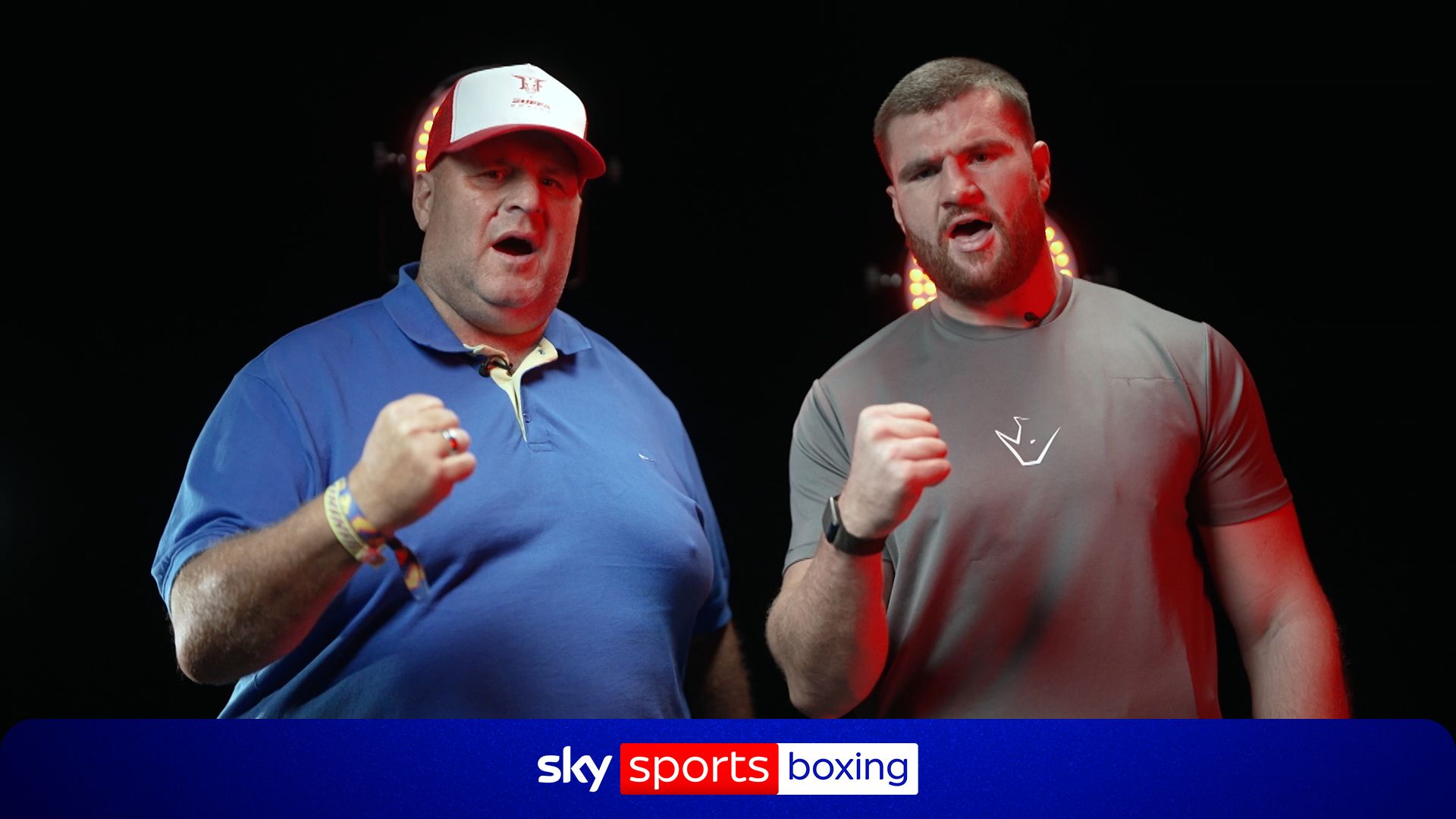 Boxing•Sep 21, 2026, 7:08 AM'Get your Chinese, BOSH! - Big John and Johnny Fisher's hilarious Zuffa Boxing 11 promo!
- Boxing•Sep 21, 2026, 5:02 AMMichael Pirotton warns Johnny Fisher ahead of Zuffa Boxing 11 main event
